
Picking between a flat and pitched roof is one of the biggest calls in any building project. The right choice affects your budget, your build time, and how long the roof lasts before it needs work again. Most homeowners only look at the upfront price, then get caught out by maintenance costs later. This guide breaks down both options in plain terms, with real 2026 figures.
Quick answer: A flat roof costs less to build and suits modern extensions, loft conversions, or sites with limited head height. A pitched roof costs more upfront but lasts far longer, sheds rain on its own, and suits period homes or conservation areas. For most London extensions, a flat roof keeps the build cost down, while a pitched roof adds long-term value and street appeal.
Table of Contents
ToggleWhat Is a Flat Roof and What Is a Pitched Roof?
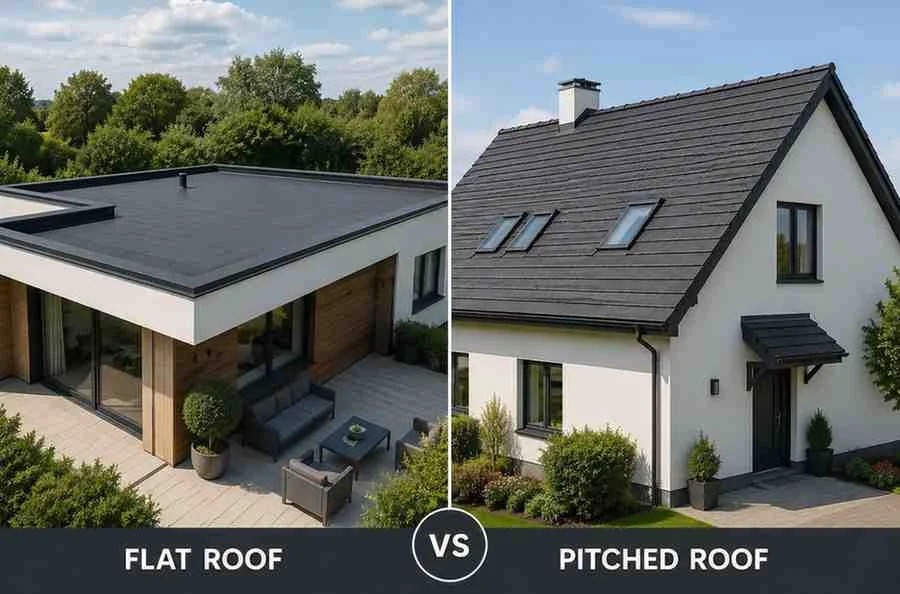
A flat roof has a slope under 10 degrees. It looks level from the ground, but it always carries a slight built-in fall so rainwater can drain away. A pitched roof has a slope of 10 degrees or more, often with two sides meeting at a central ridge. Each roof type changes your build cost, your ceiling height, and how the house looks from the street.
Extra Reading: hip to gable loft conversion
Flat Roof vs Pitched Roof at a Glance
Here is how a flat roof and pitched roof compare side by side, using current UK figures for 2026.
| Factor | Flat Roof | Pitched Roof |
| Cost per m² (2026) | £40 to £130 | £120 to £275 |
| Typical lifespan | 20 to 50 years | 30 to 100+ years |
| Maintenance | Drainage check twice a year | Largely self-clearing |
| Headroom needed | Low | Higher |
| Best suited to | Extensions, modern lofts, tight plots | Period homes, conservation areas |
These numbers vary by region, access, and the contractor you use, so always get a written quote before you commit.
Extra Reading: L shaped loft conversion
Flat Roof and Pitched Roof Pros and Cons
Weighing up a pitched and flat roof side by side helps you see where your real priorities sit.
Pros of a Flat Roof
- Lower material and labour cost
- Faster to build, with less disruption to your home
- Easy to fit rooflights or a lantern for natural daylight
- Helps you stay under planning height limits
- Can carry solar panels, a green roof, or a roof terrace
Cons of a Flat Roof
- Shorter lifespan than most pitched options
- Needs regular drainage checks to avoid standing water
- A poor fall can let water pool and damage the membrane
- Some buyers see it as less traditional looking
Pros of a Pitched Roof
- Sheds rain and snow naturally, with no design fixes needed
- Lasts decades longer with far less day-to-day upkeep
- Adds usable loft space and helps natural ventilation
- Fits the look that conservation areas often expect
Cons of a Pitched Roof
- Costs more in materials, scaffolding, and labour
- Takes longer to build than a flat roof
- Needs extra height, which can affect planning approval
- Harder and more costly to access for repairs
Flat Roof vs Pitched Roof Cost Comparison
A pitched roof usually adds £4,000 to £7,000 to a typical single-storey extension compared with a flat roof of the same size. That is roughly 20 to 40 percent more, mostly down to extra materials and labour time. Run the numbers on any flat roof pitched roof job and the pattern repeats: pitched costs more now, flat often costs more later through upkeep.
| Material | Cost per m² (2026) | Typical Lifespan |
| Felt (flat) | £40 to £70 | 10 to 20 years |
| EPDM rubber (flat) | £50 to £100 | 30 to 50 years |
| GRP fibreglass (flat) | £80 to £130 | 25 to 40 years |
| Concrete tile (pitched) | £55 to £85 | 30 to 60 years |
| Clay tile (pitched) | £70 to £110 | 60 to 80 years |
| Natural slate (pitched) | £90 to £150+ | 80 to 100+ years |
Choosing the most cost effective option does not always mean picking the cheapest material. A flat roof saves money on day one, but a pitched roof often works out cheaper per year once you spread the cost over its much longer life.
Extra Reading: How Long Does a Loft Conversion Take?
Flat and Pitched Roof for Commercial and Industrial Buildings
Property developers and commercial property owners weigh up different priorities. Large warehouses, retail units, and industrial sites often use flat roofs because they cover wide spans cheaply and leave room for solar panels, HVAC plant, or skylights. Facilities managers tend to prefer flat roofs too, since they are easier and safer to inspect during routine maintenance. Schools, hospitals, and housing associations managing large portfolios often lean toward pitched roofs instead, since they shed rain on their own and need less constant attention across many buildings.
Building Regulations and Energy Efficiency in 2026
Under current Building Regulations (Approved Document L), a new extension flat roof must reach a U-value of 0.18 W/m²K. A pitched roof needs to reach 0.16 W/m²K where insulation sits at ceiling level. Both figures affect whether your project gets signed off and how much you pay to heat the space afterward. You can check the latest planning and building rules on the Planning Portal before you apply.
How to Choose the Right Roof Type for Your Property
- Pick a flat roof if you want the lowest build cost, more daylight through rooflights, or you are close to a planning height limit.
- Pick a pitched roof if your home sits in a conservation area, or you want the longest lifespan with the least upkeep.
- Pick a mono-pitch roof if you want better drainage than flat but cannot fit a full pitch under existing windows.
- Base your choice on your loft shape if you are planning a hip to gable or L shaped conversion, since the existing roof often decides what is possible.
- Talk to a local design and build team before you commit, since site access and your street’s planning history both matter.
Final Thoughts
Both roof types do the same basic job, but they suit different homes, budgets, and timelines. A flat and pitched roof decision should rest on your site, your budget, and how long you plan to stay in the property. Get the structural details right from day one, since a poor roof choice is expensive to undo later. ABL Design & Build offers expert design and build support across London, including Loft conversions London homeowners trust for hip to gable and L shaped projects. Contact us today for a free site visit and honest advice on your roof and conversion options.
Frequently Asked Questions
Is a flat roof or pitched roof cheaper?
A flat roof costs less to build. It needs fewer materials and less labour time than a pitched roof of the same size.
How Long Does a Loft Conversion Take?
A standard loft conversion takes 6 to 10 weeks. A hip to gable or L shaped loft conversion can take 8 to 12 weeks, since more of the roof structure needs rebuilding.
Can I change a flat roof extension to a pitched roof later?
Yes, in most cases, though it needs new structural support, a fresh planning check, and possibly a party wall agreement with your neighbour.
Does roof type affect my home’s value?
It can. A well-built pitched roof often appeals more to buyers in period areas, while a flat roof with good rooflights can suit modern, light-focused homes.