
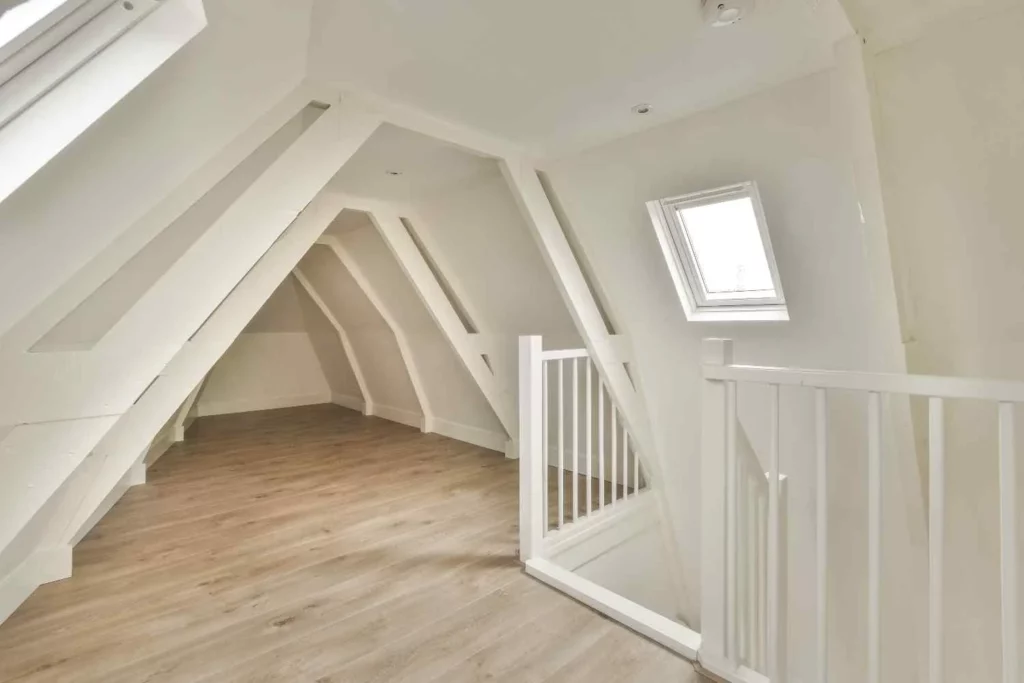
Thinking about a loft conversion but worried your roof is too awkward? An l shaped loft conversion could be the answer. It turns an unused Victorian or Edwardian roof into real living space. Many homeowners choose this layout because it fits terraced houses so well.
This guide covers design, planning rules, costs and timelines. You will also find answers to the questions homeowners ask most often. By the end, you will know if this conversion suits your home.
Table of Contents
ToggleWhat Is an L Shaped Loft Conversion?
An L-Shaped Loft Conversion uses two dormers built at a right angle to each other: One dormer sits on the main roof. The other sits above the rear extension, known as an outrigger. Together they form an L shape when you view the roof from above.
This design is also called an l-shaped dormer loft conversion. Builders and architects sometimes just call it a shaped dormer loft conversion. Each section can be a flat roof dormer or a pitched roof box, depending on what your council allows.
The point of this style is simple: It turns unused roof space into proper rooms. Because it joins two dormers together, it creates far more loft space than a single dormer ever could.
Which Houses Suit L Shaped Loft Conversion Style?
This layout works best on Victorian and Edwardian Houses with a rear outrigger. Most mid-terrace and end-of-terrace homes built between 1880 and 1910 have this kind of layout already. The outrigger gives you a second roof to build on, and that second roof is what creates the L shape.
If your home is detached or has no rear wing, an l shaped loft extension style build may not work. A surveyor or architect can check your roof shape before you commit to any plans. This small step saves money later.
L Shaped Loft Conversion vs Hip to Gable Loft Conversions
Hip to Gable Loft Conversions suit homes with a sloped side roof, often semi-detached or detached houses. The build straightens the sloped side into a vertical wall, which adds headroom but usually only affects one side of the roof.
An l shaped loft conversion goes further on a terraced house. It uses both the main roof and the rear outrigger at the same time. This often delivers more usable square metres than a hip to gable build, especially on mid-terrace homes that have no side roof to alter in the first place.
Design Ideas for Your L-shaped Layout
A well planned l shaped dormer loft conversion gives you two functional rooms instead of squeezing everything into one. The shape naturally splits the floor into two zones, which makes planning the layout much easier.
A Family Bedroom Layout
Many homeowners use the extra space for two children’s bedrooms. The main roof dormer can hold one room. The rear dormer holds the other, often sharing a small landing between them.
A Master Suite With En Suite
This layout suits homeowners who want a larger master bedroom with an en suite attached. One dormer becomes the bedroom. The other holds the bathroom and a walk-in wardrobe, so nothing feels cramped.
This is one of the most requested layouts for an L-Shaped Loft Conversion today. It works well for couples who plan to stay in their home long term rather than move for more space.
A Home Office or Studio
Remote workers often turn the smaller dormer into a quiet office. A built-in wardrobe in the main bedroom keeps the rest of the floor open and tidy. Good loft conversion design tucks storage into the eaves so the finished room never feels boxy.
Planning Permission and Permitted Development Rules
Most l shaped loft conversions fall under permitted development, so you may not need full planning permission. Permitted development allows up to 40 cubic metres of extra roof volume on a terraced or semi-detached house.
You will likely need a full application if your house sits in a conservation area, is a listed building, or if the new roof would sit higher than the existing ridge line. Building regulations approval is still required even when permitted development applies, so do not skip that step.
You may also need a party wall agreement with your neighbour. This protects both properties while building work happens close to a shared wall. Check the Planning Portal for current rules before you start any work, since requirements can change.
How Long Does a L-Shaped Loft Conversion Take?
Most l shaped loft conversions take 8 to 14 weeks to build from start to finish. Roof removal and structural steelwork happen first. After that comes insulation, windows, plastering and finishing.
Depending on the size of your outrigger, larger projects with two bathrooms can run longer than this. Weather, planning delays and party wall agreements can also add time to the schedule. Ask your builder for a written timeline before work begins, not after.
Extra Reading: How Long Does a Loft Conversion Take?
How Much Does L-Shaped Conversion Cost?
Costs vary by region, roof size and finish, but typical ranges for London and the South East look like this:
- Basic l shaped dormer with one extra bedroom: roughly £55,000 to £75,000
- A version with a bedroom and en suite: roughly £75,000 to £95,000
- Larger builds with two bathrooms or an added home office: £95,000 and up
London projects often sit at the higher end of these ranges. Labour costs and site access both push the price up compared with other parts of the country. Always get an itemised quote rather than a single rounded figure, so you know exactly what you are paying for.
Does This Loft Conversion Add Value?
A well built loft conversion can add a meaningful amount to your home’s value, often more than a new kitchen or bathroom on its own. For Victorian and Edwardian terraces, adding a bedroom and bathroom through the roof tends to bring the strongest return, since these homes are usually valued by bedroom count first.
In our experience working on terraced houses across London, an extra double bedroom with an en suite appeals to buyers more than almost any other upgrade. This matters most for property investors and landlords who need the work to pay for itself through resale value or rental income.
The Build Process Step By Step
- Survey and design: an architect or designer measures your roof and outrigger
- Planning check: confirm whether you need full planning permission or can rely on permitted development
- Party wall notice: served to neighbours where the build sits close to a shared wall
- Structural work: steel beams go in, the old roof comes off, new dormers go up
- First fix: insulation, plumbing and electrics are installed
- Second fix: plastering, flooring, fitted wardrobes and doors go in
- Final inspection: building control signs off the finished work
Why Homeowners Choose ABL Design & Build
ABL Design & Build has years of hands-on experience with L Shaped Dormer Loft Conversion projects across London’s Victorian and Edwardian terraces. Our team handles design, planning permission and the full build under one roof, so you are not juggling separate contractors.
We offer a Loft conversions London homeowners trust, from the first sketch through to the final coat of paint. Every project comes with a clear cost breakdown and a realistic build timeline, so there are no surprises once work starts on site.
Final Thoughts
This loft conversion remains one of the best ways to add space to a Victorian or Edwardian terrace. It suits growing families, home workers and anyone who would rather improve their home than move. The cost is real, but so is the value it adds to your daily life and your property.
Ready to see what your roof could become? Contact us today for a free consultation on your l shaped loft conversion.
FAQs
Do I need planning permission for an l shaped loft conversion?
Often not. Most projects fall under permitted development rules, but conservation areas, listed buildings and oversized roofs usually need a full application.
What is the difference between an L shaped and a rear dormer loft conversion?
A rear dormer uses one box built on the back roof only. This style adds a second dormer on the outrigger, joining both into an L shape for more additional living space.
Can I add an en suite to this loft conversion?
Yes. The second dormer is often used for a bathroom or en suite positioned right next to the master bedroom.
Will an l shaped loft conversion suit a semi-detached house?
It can, but only if the house has a rear outrigger. Without one, a hip to gable or single rear dormer style usually works better for that roof shape.
Do I need scaffolding for an l shaped dormer loft conversion?
Yes, almost always. Scaffolding goes up around the whole roof before any structural work starts, both for safety and for site access.