
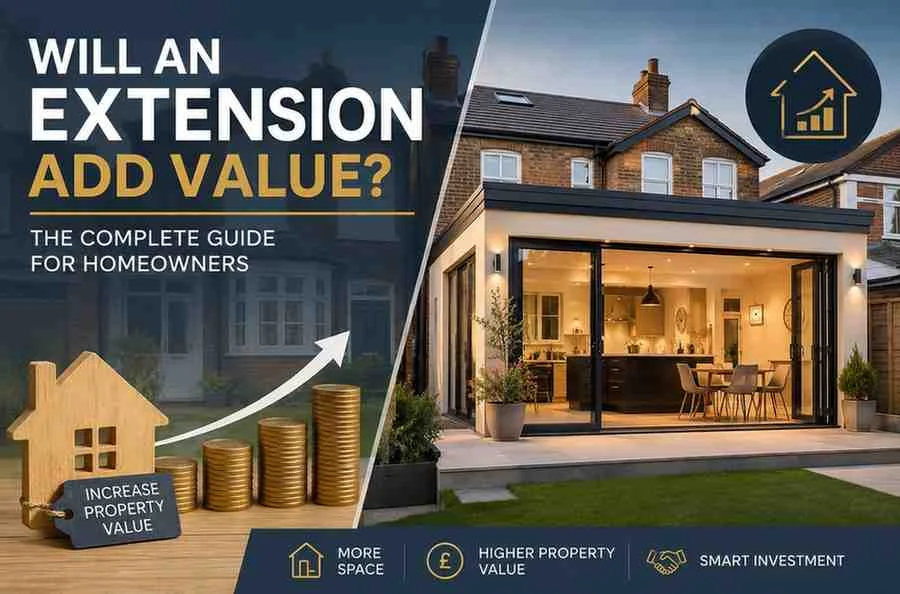
If you are staring at a small kitchen or a cramped landing, you have probably asked yourself: will an extension add value to my house? It is a fair question. Building work is expensive, and you want proof it pays off before you sign anything.
The short answer is yes, in most cases. But the size of that gain depends on the type of build, your street, and how well the work is planned.
Table of Contents
ToggleDoes an Extension Add Value to a House?
Does an extension add value to a house? In most parts of the UK, the answer is a clear yes. Extra usable space almost always pushes up what buyers will pay.
Estate agents look at three things when they value a home:
- Total floor space
- Number of usable rooms
- How the layout flows from room to room
An extension improves all three. That is why it remains one of the most reliable ways to boost a property value increase without moving house.
This does not mean every build pays for itself. A poorly planned extension can shrink a garden, block light, or feel bolted on. Buyers notice these things fast, and they will knock money off their offer.
What Buyers Actually Look For
Buyers are not impressed by size alone: They want space that solves a real problem: more room for a family, a proper home office, or a kitchen that fits a table for six.
Keep that in mind before you draw up plans. Build for how people live, not just for square footage.
How Much Value Can Different Types of Extensions Add?
The amount of value a home extension or conversion adds depends on the type of project, the quality of the design and construction, the space created, and local property demand. As a general UK guide, different types of extensions and conversions can have different potential value increases:
| Extension or Conversion Type | Potential Increase in Property Value |
|---|---|
| Single-storey extension | 5–8% |
| Double-storey extension | Up to 12% |
| Loft conversion | Up to 20% |
| Garage conversion | Up to 20% |
Single-Storey Extension: 5–8%
A well-designed single-storey extension can potentially increase a property’s value by around 5–8%. These extensions are particularly popular for creating larger kitchens, open-plan kitchen-diners, family rooms and additional living space.
The value added can be higher where the extension significantly improves the property’s layout and creates a high-quality, practical living area. However, the final figure will depend on the property’s location, size and existing market value.
Double-Storey Extension: Up to 12%
A double-storey extension can potentially add up to 12% to a property’s value because it can provide substantially more usable floor space across two levels. It may allow homeowners to create an enlarged kitchen or living area downstairs while adding an extra bedroom or bathroom upstairs.
Because bedrooms and bathrooms are highly valued by buyers, a well-planned two-storey extension can be particularly beneficial where it improves the overall balance and functionality of the home.
Loft Conversion: Up to 20%
A loft conversion can potentially increase a home’s value by up to 20%, particularly when it creates a useful additional bedroom and bathroom. It can be an efficient way to gain living space without extending into the garden.
However, not every loft conversion will achieve the same increase. Head height, usable floor area, natural light, the quality of the conversion and demand for additional bedrooms in your local area can all influence the result.
Extra Reading: How Much Value Does a Loft Conversion Add?
Garage Conversion: Up to 20%
A garage conversion can potentially add up to 20% to a property’s value when it creates high-demand living accommodation, such as a bedroom with an en-suite bathroom. A garage converted into a home office, playroom or family room may also add value, although the potential increase can be lower.
Before converting a garage, consider whether losing off-street parking could negatively affect your property’s appeal. In some areas, parking is highly valued and could offset some of the benefit gained from the additional living space.
Extra Reading: Garage Conversion Cost
Important: These Percentages Are Not Guaranteed
These figures should be treated as general UK estimates rather than guaranteed increases in property value. The actual value added by an extension depends on factors such as your property’s location, current market value, the quality of the construction, the amount of space created and the ceiling price for similar properties in your area.
For example, spending £80,000 on an extension does not automatically mean your home will increase in value by £80,000 or more. Before committing to a major project, it is sensible to compare your proposed budget with recent sales and asking prices for similar properties locally and, where appropriate, obtain an independent valuation.
The key is to create useful, well-designed space that buyers would genuinely pay for, rather than simply adding square footage.
Is a House Extension Worth It?
Is a house extension worth it? For most homeowners, yes, as long as the numbers add up before work starts.
Before you commit, run through this checklist:
- Get quotes from at least three builders
- Check what similar extended homes nearby have sold for
- Compare build cost against expected value uplift
- Factor in disruption, time, and living costs during the build
- Speak to a local estate agent about buyer demand in your area
If the projected uplift barely covers the build cost, moving house instead may make more sense. A good builder will tell you this honestly, rather than push a build that will not pay off.
Related reading: Rear House Extension Ideas
Planning Permission and How It Affects Value
Planning permission rules can shape both your design and your resale value. Many single-storey rear extensions fall under permitted development rights, meaning no formal application is needed if they meet set size limits.
Larger builds, side extensions, or work on listed buildings usually need full planning permission. Always check with your local council before finalising drawings.
Buyers and their solicitors will ask for proof that any extension had proper permission or a lawful development certificate. Missing paperwork can hold up a sale or force a price cut, even on a beautifully finished extension.
Property Value Increase: What Really Moves the Needle
A property value increase from an extension depends on more than square footage. These factors matter just as much:
- Matching the extension’s brick and roofline to the original house
- Keeping natural light strong with the right window and door sizes
- Protecting garden space rather than eating all of it
- Finishing to the same standard throughout the house, not just the new room
Skimping on any of these can drag down the final valuation, even if the extension itself is large.
Return on Investment (ROI): Real Numbers to Expect
A home improvement project like an extension rarely returns 100% of its cost pound for pound. Realistic ranges reported across UK renovation and property sources sit between 50% and 90% of build cost recovered through added value, with kitchen and open plan projects often at the higher end.
The rest of the return comes from a faster sale, wider buyer interest, and a home that suits your family for years before you even sell. Treat those benefits as part of the payoff too, not just the final sale figure.
Extra Reading: Do I Need an Architect for an Extension in 2026
Common Mistakes That Reduce Resale Value
Even a well built extension can lose money if these mistakes creep in:
- Building over most of the garden, leaving little outdoor space
- Choosing an extension that does not match nearby homes in size or style
- Skipping proper building regulations sign off
- Ignoring how the new space connects to the rest of the house
A resale value boost only holds up if the whole house still feels balanced once the work is done.
Why Work With ABL Design & Build
Getting the value right takes more than a good builder. It takes a team that understands local buyer expectations, planning rules, and build quality from day one.
ABL Design & Build works with homeowners across the capital on house extensions London projects, from single-storey kitchen builds to full double-storey conversions. Every project is planned around both how you live now and what buyers will value later.
Our team handles design, planning applications, and build quality checks under one roof, so nothing gets missed between the drawing board and the finished room.
Conclusion
An extension can add real value to your home when it is planned properly and built to a high standard. Focus on layout, light, and matching your home’s existing style, and the numbers tend to follow. If you want a clear, honest view of what your property could gain, Contact us today for a free consultation on your house extensions London project.
Frequently Asked Questions About Extension Value
Does an extension always add value to a house?
No, not always. A well-designed extension can increase your home’s value, but the amount depends on its location, size, quality, layout and local property prices. An extension can also add less value than it costs to build, so the project budget should be compared with the likely resale value before work begins.
Is it cheaper to extend or move house?
Extending can be cheaper than moving when you already like your home and location. Moving involves additional costs such as stamp duty, estate agent fees, legal fees and removal costs. However, moving may be the better financial option if your property has limited extension potential or you need substantially more space.
How much value does a £50,000 extension add?
There is no fixed amount. A £50,000 extension could add more or less than £50,000 to your property’s value depending on the location, design, quality and local property market. Compare your planned costs with recent sales of similar extended homes in your area before committing to the project.
What type of extension adds the most value?
The extension that adds the most value depends on the property and local buyer demand. Loft conversions, double-storey extensions and well-designed kitchen extensions can all provide strong value when they create genuinely useful living space. Adding a bedroom or bathroom can be particularly valuable where these features are in demand locally.
Does a kitchen extension increase property value?
Yes, a well-designed kitchen extension can increase property value by creating a larger and more practical living space. Features such as a good layout, natural light, quality finishes and a strong connection to the garden can improve buyer appeal. However, the cost should remain proportionate to the property’s overall value.
Does a double-storey extension add more value than a single-storey extension?
It can, because a double-storey extension creates additional usable space across two floors and can add bedrooms or bathrooms as well as living space. However, it also usually costs more to build. The best option depends on how much space you need, your budget and the potential value of your property.
Can an extension reduce the value of a house?
Yes. A poorly planned extension can reduce buyer appeal if it removes too much garden space, blocks natural light, creates an awkward layout or looks out of proportion with the original house. Poor workmanship or missing planning and building regulations documentation can also make a property harder to sell.
Does an extension increase council tax?
An extension does not automatically result in an immediate council tax increase. Council tax bands are based on property valuation, and changes to the property can be considered during a future reassessment. Homeowners should check the current rules that apply to their property if this is a concern.
Do I need planning permission for an extension?
Not necessarily. Some extensions can be built under permitted development rights if they meet the required conditions and size limits. Other projects require planning permission. Building regulations can also apply separately. Check the requirements for your property and local council before starting construction.
How can I maximise the value added by an extension?
Create useful, well-designed space rather than simply adding floor area. Prioritise a practical layout, natural light, quality construction, suitable finishes and a good connection between the house and garden. Avoid overbuilding, protect sufficient outdoor space and make sure all required planning and building regulations approvals are properly documented.