
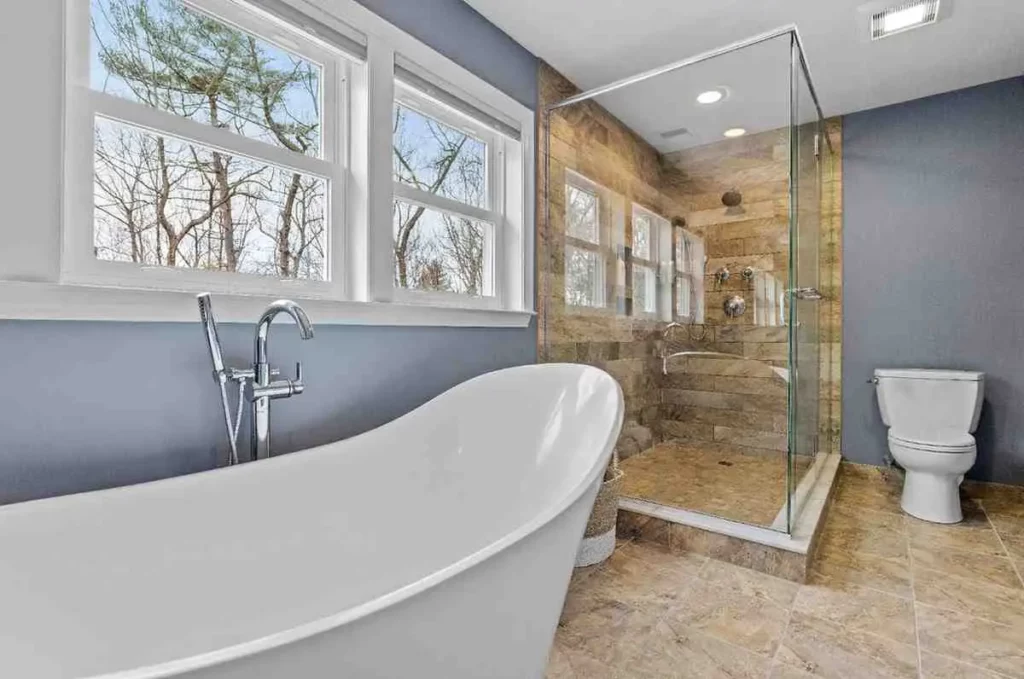
Quick answer: The cost of renovation of bathroom projects in the UK typically runs £4,500–£12,000 for a standard family bathroom, with most homeowners settling around £6,500–£8,500. A basic refresh can be done for £2,500–£4,500, while a premium wet room or large en-suite runs £12,000–£20,000+. London costs sit roughly 15–25% above the UK average because labour, not materials, drives most of the bill.
If you’ve had quotes anywhere from £2,500 to £25,000 for what feels like “the same job,” you’re not being overcharged you’re seeing how differently one bathroom can be scoped. This guide breaks every cost down by size, layout, region, and finish, so you know exactly what you should be paying before you sign anything.
Table of Contents
ToggleCost of Renovation of Bathroom: Key Takeaways
- Labour is 45–60% of your total bill: more than in any other room in the house
- Moving the toilet or shower drain: adds £800–£2,500 on its own keeping the layout is the single biggest saving you can make
- A wet room costs roughly 30–60% more: than a standard bathroom because of tanking and drainage
- Always hold back 10–15% as contingency: hidden damp, old pipework, and rotten flooring are common once the old suite comes out
- Get at least three like-for-like quotes: specifying the same tiles, fittings, and scope, or the numbers aren’t comparable
Average Cost of Bathroom Renovation in the UK (2026)
| Renovation type | Typical UK cost | What’s included |
| Basic refresh (same layout) | £2,500 – £4,500 | New suite, tiling splash zones, no plumbing moves |
| Standard family bathroom | £5,000 – £9,000 | Full strip-out, new suite, full tiling, electrics |
| Wet room / premium bathroom | £10,000 – £20,000+ | Tanking, level-access shower, high-spec finishes |
| Small cloakroom / en-suite | £2,000 – £5,500 | Toilet, basin, minimal tiling |
Most UK homeowners land in the £6,500–£8,500 bracket for a typical 6–8m² family bathroom with a full strip-out, mid-range suite, and full tiling. That number moves in two directions from there: down if you keep the existing layout and choose budget fittings, and up sharply if you move pipework, add a wet room, or specify natural stone and large-format tiles.
Postcode matters too. A renovation quoted in Manchester or Sheffield can be 15–25% cheaper than the identical job quoted in London or the Home Counties, purely because of local day rates.
Cost by Bathroom Size and Budget Tier: cost-by-tier
| Tier | Price range | What you get |
| Budget | £2,000 – £4,500 | Close-coupled toilet, pedestal basin, acrylic bath, ceramic tiles (£10–£20/m²), same layout, basic LED lighting |
| Standard (most common) | £4,500 – £9,000 | Wall-hung WC, vanity unit, shower-over-bath, porcelain tiles (£25–£40/m²), moderate layout changes |
| Premium | £10,000 – £20,000+ | Freestanding bath, wall-hung WC with concealed cistern, natural stone or microcement (£50–£70/m²), underfloor heating, full repositioning |
Within a tier, the biggest swing factor isn’t the taps or the tiles it’s whether the toilet and shower stay exactly where they are.
Full Cost Breakdown: Labour vs Materials cost-breakdown
Most homeowners assume the bath, basin and toilet are the expensive part. They’re not. Labour plumbing, electrics, tiling, and waterproofing typically makes up 45–60% of the total bill, because a bathroom has more surfaces to seal, more trades involved, and less room for more than one person to work at a time.
| Item | Typical cost |
|---|---|
| Bathroom suite (toilet, basin, bath or shower) | £600 – £2,500 |
| Tiling labour | £25 – £60 per m² |
| Tiles (materials) | £15 – £150 per m² |
| Plumber day rate | £250 – £500 |
| Electrician (Part P notifiable work) | £250 – £450 per day |
| Old bathroom strip-out and disposal | £600 – £1,000 |
| Waterproofing / tanking (wet areas) | £250 – £1,000 |
| Extractor fan (humidistat upgrade) | £150 – £300 |
| Full installation, all-in, per m² | £800 – £1,200 |
That per-m² figure assumes there’s nothing structurally wrong behind the walls. Older properties routinely turn up something the quote didn’t account for see hidden costs below.
How Long Does a Bathroom Renovation Take?
| Project size | Typical duration |
|---|---|
| Small cloakroom / en-suite | 3 – 5 days |
| Standard family bathroom (no layout change) | 7 – 10 days |
| Standard bathroom with layout changes | 10 – 15 days |
| Wet room or luxury renovation | 3 – 4 weeks |
A typical sequence: strip-out and disposal (1–2 days), first-fix plumbing and electrics (1–2 days), tiling (2–4 days, plus drying time between coats), fixture fitting (1–2 days), then snagging. Add extra time if you’re moving the toilet or shower new pipe runs need to set before tiling can start over them.
How to Save Money on Your Bathroom Renovation
You can save money without making the bathroom feel cheap. Try these approaches:
- Keep your existing layout instead of moving pipework
- Choose mid-range fittings instead of premium brands for items like taps and shower heads
- Reuse a vanity unit if it is still in good condition
- Get three written quotes before choosing a contractor
- Buy tiles and sanitaryware in sale periods rather than rushing the order
- Limit full-height tiling to wet zones only, using paint elsewhere
A clear plan before work starts is the single best way to control your average cost. Once a contractor is on site, changes get far more expensive.
DIY Versus Hiring a Professional
DIY can lower upfront spend, but bathrooms leave little room for error. Poor waterproofing or incorrect plumbing often costs more to fix later than it would have cost to do properly the first time.
Hiring qualified trades protects you in three ways:
- Correct certification for plumbing and electrical work under UK building regs
- Warranty cover if something fails after the job is done
- Faster turnaround, since experienced fitters know how to sequence the work
For most homeowners, a mix of DIY prep (clearing the room, choosing fittings in advance) paired with professional fitting gives the best balance of cost and quality.
Why Homeowners Choose ABL Design & Build
At ABL Design & Build, we plan every renovation around a clear, honest quote from the start. No hidden add-ons and no rushed labour.
Our Bespoke kitchen London service covers everything from a simple suite swap to a full luxury wet room. We handle the plumbing, tiling, electrics, and finishing under one team, so you are not chasing three different tradespeople.
If you want a realistic number for your own project, our team can walk your space and give you a written quote within days.
Final Thoughts
The cost of renovation of a bathroom in the UK depends on three things far more than anything else: whether the layout changes, the size of the room, and the finish you choose. Everything else brand of tap, brand of tile moves the number by hundreds, not thousands.
Get your layout decided first, get three like-for-like quotes, build in a 10–15% contingency, and prioritise proper waterproofing over flashy extras. That’s what separates a bathroom that looks good in year one from one that still looks good in year ten.
Ready for a clear, honest quote? Contact us today and let our Bespoke Kitchen and Bathrooms London team turn your plans into a bathroom built to last.