
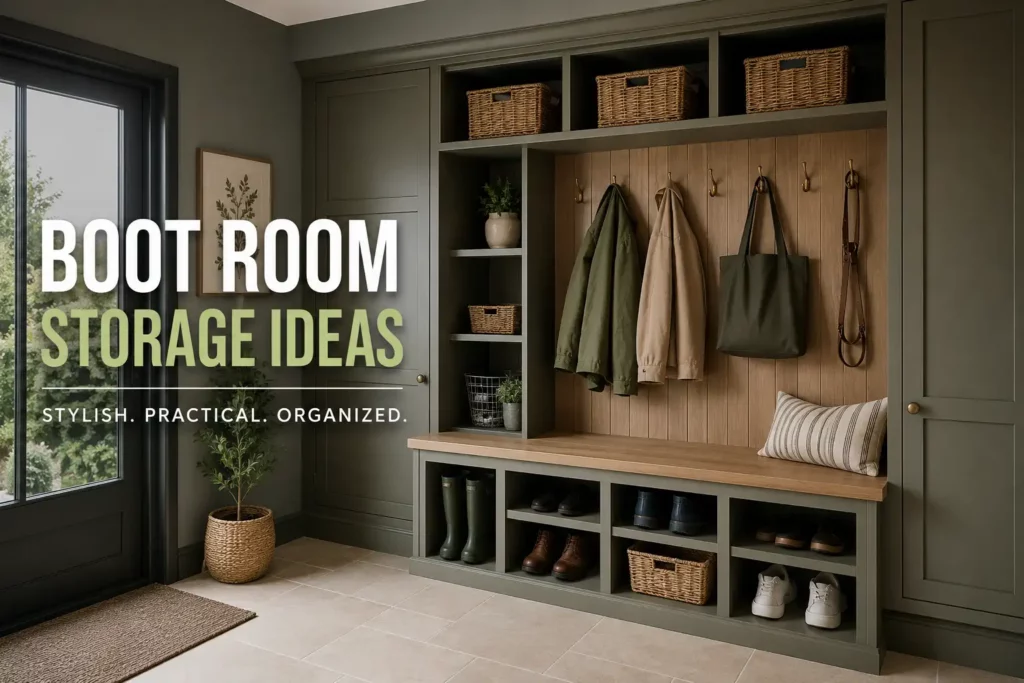
Quick answer: The best Boot Room Storage Ideas pair a deep bench with shoe cubbies, a row of tall hooks, a drying zone for wet gear, and closed cupboards for bulky items. Give every family member their own space. Keep floors clear, allow airflow, and pick materials that handle mud and water.
Muddy shoes, wet coats, and dog leads pile up fast near the back door. These Boot Room Storage Ideas help you give each item a home so the mess stays out of your hallway and kitchen.
Table of Contents
ToggleThis guide covers layouts, units, materials, and costs. It comes from the planning advice we give homeowners at ABL Design & Build, so you can plan with confidence.
Why Every Family Home Needs a Well-Planned Boot Room
A boot room is more than a place to dump shoes. It acts as a buffer between the outside world and the rest of the house. Without one, dirt and damp spread into hallways and living spaces, and clutter builds up fast near the front or back door.
Families with children and pets feel this pressure the most. Bags, sports kit, and multiple pairs of shoes need a home that is easy to reach and easy to clean. When the layout is planned properly, everyone in the house knows exactly where their things belong, which cuts down on morning chaos and keeps floors protected from grit and moisture.
Extra Reading: Rear House Extension Ideas
What a Boot Room Does and Why Storage Matters
A boot room is a small entry space for outdoor gear. It sits between the garden or street and the main house. Some people call it a mudroom, and others use a utility room for the same job.
Good storage keeps dirt in one spot. It also dries items faster and stops clutter from spreading. A family of four can own over a dozen pairs of shoes, plus coats, hats, gloves, and bags. Without a plan, all of it ends up on the floor.
Extra Reading: House Extension Types Explained
Plan Before You Buy Anything
Start with a simple audit. Count the items your household uses each week. Then measure the space.
Measure the Space
Check width, depth, and ceiling height. A bench needs about 40 cm of depth. A hanging rail needs about 30 cm of clear wall depth for coats. Leave at least 90 cm of walking room in front of the units.
Split the Room Into Zones
Zones keep the room working every day. Use four:
- Sit zone: a bench where people pull on and off footwear.
- Hang zone: coat hooks and rails at two heights, one for adults and one for kids.
- Dry zone: a drying rack or heated rail for wet items.
- Hide zone: closed cupboards for gear you rarely use.
The Best Boot Room Storage Ideas for Real Homes
Here are the units that work hardest in daily use.
Bench Seating With Shoe Cubbies
Bench seating is the anchor of most boot rooms. Open cubbies under the seat hold shoes in pairs. Add a lift-up lid for scarves and sports kit. A padded top makes it comfortable for kids and older adults.
Wall Hooks and Peg Rails
Hooks beat hangers in tight spaces. Fit coat hooks in a row at shoulder height. Add a lower row at about 100 cm for children. A shelf above each row holds hats and bags.
Built-In Lockers
Built-in lockers give each person a private bay. They look neat and suit busy homes. Each bay can hold a hook, a shelf, and a small basket. Label them if you have young children.
Boot Trays and Wellies Racks
A boot tray catches water and mud. Use a rubber or stone tray under wet pairs. Tall wellies need a rack that holds them upside down so they drain and air out. Angled shelves also work well for walking boots.
Tall Cupboards for Bulky Items
Floor-to-ceiling cupboards hide vacuum cleaners, sports gear, and seasonal coats. Choose shallow doors so they do not block the path. Pull-out drawers at the base are good for pet items.
Overhead Shelving and Baskets
Use the space above the hooks. Baskets keep gloves, caps, and dog leads sorted. Use woven or plastic baskets that can be wiped clean.
Extra Reading: Property Refurbishment London
Small Boot Room Storage Ideas
You do not need a large room. A narrow hallway or the side of a porch can work. These small Boot Room Storage Ideas fit tight spots:
- Use a slim shoe bench with a hinged top.
- Mount a fold-down seat on the wall.
- Fit hooks on the back of the door.
- Add a thin shoe cabinet with tilt-out drawers.
- Use vertical space with tall units that reach the ceiling.
Keep colours light and finishes simple. A cluttered small room feels even smaller.
Materials, Floors, and Heat
Wet gear needs a room that can handle moisture. Choose finishes that clean easily.
- Floors: porcelain tile or sealed stone resists water and scuffs.
- Wall paint: use a washable, scrub-friendly finish.
- Cabinet doors: moisture-resistant boards or painted hardwood last longer.
- Heat: underfloor heating dries wet boots quickly and keeps the floor warm.
- Airflow: a small extractor fan or a vented cupboard stops damp smells.
Add a mat or a drain-through grille by the door. It catches grit before it reaches the main floor.
Lighting and Power
Good light makes a small room easy to use. Fit ceiling spotlights and a motion sensor near the door. Add a socket for charging gloves, torches, or a heated rack. Plan these before the units go in. Moving wires later costs more.
When a Boot Room Needs More Space
Some homes lack room for a proper entry zone. An extension can fix that. A side return or rear addition can add a boot room, a utility area, and extra kitchen space in one build.
Our team handles House Extensions Twickenham projects, from design to final fit. At ABL Design & Build, we plan the storage layout during the early drawings. This means your hooks, benches, and drainage sit in the right place from day one.
Common Mistakes to Avoid
Most boot room problems come from poor planning. Watch for these:
- Making benches too shallow to sit on.
- Putting hooks too high for children.
- Using solid cupboards for wet boots with no airflow.
- Choosing soft flooring that stains.
- Forgetting sockets and lights.
- Skipping a drying spot.
Quick Setup Checklist
- List every item your household stores.
- Measure the room and mark the door swing.
- Choose your four zones.
- Pick water-friendly materials.
- Plan lights, sockets, and heat.
- Get a written quote before you order.
Conclusion
A good boot room keeps mud out and your home calm. Start with zones, pick tough materials, and plan lights and heat early. These Boot Room Storage Ideas work in big rooms and small ones.
Ready to plan yours? Contact us today for a friendly chat and a free quote on your project.
Frequently Asked Questions
What should go in a boot room?
A bench, hooks, shoe storage, a tray for wet items, and closed cupboards. Add baskets for small items.
How big should a boot room be?
A useful one can be as small as 1.5 metres wide. Wider rooms allow a bench and lockers side by side.
How do I keep a boot room from smelling damp?
Use airflow, heat, and a drying rack. Let items dry fully before you store them in a closed cupboard.
Is a boot room the same as a utility room?
Not always. A boot room focuses on outdoor gear. A utility room often adds a washing machine and sink.
Can I add a boot room without an extension?
Yes. A hallway, porch, or garage corner can work with the right units.